Latest News
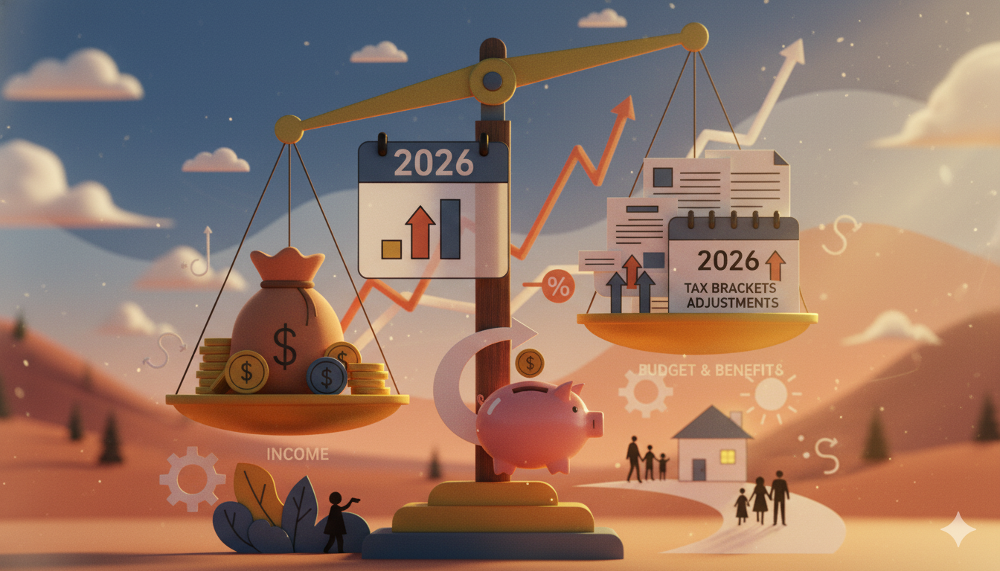
2026 Tax Brackets & Benefit Adjustments: What the Latest Changes Mean for Your Budget
As we approach tax-year 2026, the Internal Revenue Service has announced adjustments to income-tax brackets, standard deductions and benefits. For many taxpayers these changes represent a chance to hold on to more of their pay, but they also underscore the importance of strategic planning. In this article, a personal‐finance specialist walks through the key shifts, who stands to gain or lose, and practical steps you can take now to align your budget and tax planning for 2026.
Taxes and Food Prices: Why Budget Moves Could Raise Your Grocery Bill
Supermarket industry voices warn that planned tax hikes on retail businesses may translate into higher food prices for households. This piece explains the background, what’s at stake for your household budget, and what you as a consumer can do to stay ahead.

$2,000 Emergency Fund Beats a $1 Million Portfolio: The Surprising Predictor of Financial Well-bein
A new wave of research shows that financial peace of mind doesn’t come from wealth, but from readiness. A modest emergency fund — sometimes just $2,000 — can do more for your mental and financial stability than a million-dollar investment account ever could.

America’s Wealthiest Shoppers Are Boosting Spending — While Lower-Income Consumers Pull Back
As high-income households drive retail growth, middle- and low-income Americans are tightening their budgets. Here’s what the new spending divide means for the economy — and for your own financial plan.

45% of Parents Are Willing to Go Into Debt for Holiday Spending — How to Avoid the Trap
New surveys show that nearly half of parents plan to borrow to fund this year’s holiday season. Here’s why emotional spending spikes during family celebrations — and what you can do to enjoy the holidays without starting the new year in the red.

Why the Cost of Halloween Is Creeping Up
Pumpkins, candy, and costumes are pricier than ever — and the reasons go beyond simple inflation. Here’s what’s really driving Halloween’s growing price tag and how families can keep it fun without draining their wallets.

Why Weak Global Crypto Rules Pose a Growing Threat to Your Finance
As the global cryptocurrency market swells, gaps in regulatory oversight are exposing ordinary investors and the entire financial system to risk. The Financial Stability Board warns that without unified rules, crypto firms can exploit loopholes—and that spillovers from one market could cascade into others.

Credit in 2025: The High Stakes of Plastic Borrowing
As credit card APRs remain at multi-decade highs and delinquencies rise across income levels, borrowing has become costlier and riskier. Real data from 2025 show a credit system under pressure — and remind consumers to approach debt with open eyes and sharp discipline.

Digital Euro Readiness by 2025–2026 — How It Could Change Everyday Finances
Europe is preparing for the introduction of the digital euro — a project that could redefine the way we save, pay, and think about money. Expected to enter pilot use around 2026, the new form of central-bank digital currency (CBDC) aims to combine the convenience of modern payments with the safety of central-bank money. But what will it really mean for everyday people, for our bank accounts, and for our sense of financial control?

Europe’s Instant Payments Deadline Arrives — What It Means for Everyday Users
On 9 October 2025, the EU’s Instant Payments Regulation (IPR) will require all euro-area payment service providers to support instant credit transfers and offer a free “Verification of Payee” (VOP) check. For consumers and small businesses, this means faster euro transfers, but also new risks and adjustments. As a personal finance specialist, I walk you through what changes, what to watch out for, and how to adapt your cash flow habits.