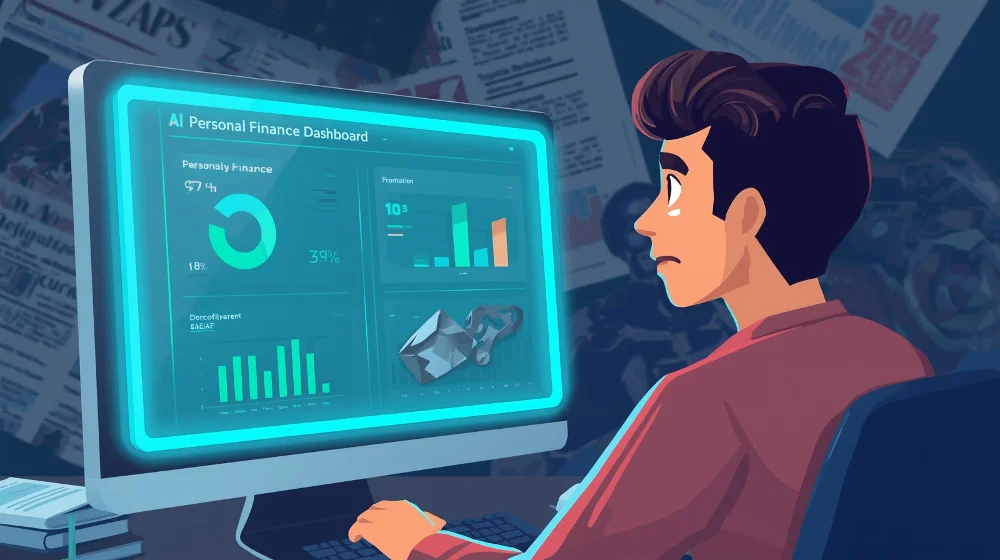
Over the past year, artificial intelligence has slipped quietly into nearly every corner of personal finance. What began as a novelty — asking a chatbot to explain inflation or summarize a pension plan — has grown into a habit for millions of Europeans seeking clearer guidance in uncertain times. While professional advisers still dominate the regulatory landscape, everyday consumers are increasingly turning to conversational AI tools for help with decisions that, in earlier years, they would have reserved for certified specialists.
During conversations with households, small business owners, and first-time investors across Europe, a clear theme emerges: people want financial clarity, and they want it quickly. With interest rates high, the cost of living still squeezing budgets, and traditional financial advice becoming more expensive or harder to access, AI has become a convenient substitute. Many users say they appreciate the simplicity — and the fact that a chatbot does not judge their lack of financial knowledge.
Yet, despite the growing enthusiasm, financial regulators continue to remind consumers that AI systems are not licensed advisers. Some investment decisions require understanding not only risk tolerance, but also regulatory rules, tax impacts, and long-term consequences that automated tools may oversimplify. But for individuals navigating everyday financial questions, AI has already become a companion that feels indispensable.
The way people use these tools varies widely. Young investors often turn to AI for explanations of ETFs, dividend strategies, or how to build a portfolio with modest monthly contributions. Parents, meanwhile, ask for budgeting help or strategies to manage rising household expenses. Others use AI to compare mortgage types, understand credit terms, or identify warning signs of predatory lending — tasks that previously demanded hours of online research.
One user described how AI helped them break down a retirement plan that “always felt too technical to understand.” Another said they use AI weekly to simulate different savings trajectories, especially when deciding how to allocate income between long-term investments and emergency funds. For many, the technology acts not as a decision-maker, but as a translator — converting complex jargon into language they can apply to real life.
However, challenges remain. The biggest risk is misplaced confidence: an AI tool can deliver an answer instantly, but that answer might lack context or may not reflect current regulations in a user’s country. Investment products, in particular, often come with legal and tax considerations that general-purpose chatbots cannot fully interpret. This is why consumer protection agencies continue urging users to treat AI as an educational aid rather than a source of final recommendations.
Financial advisers are also rethinking their role. Some now incorporate AI tools into their practice, not as replacements, but as a way to help clients ask more informed questions. They report that meetings have become more productive because clients arrive with a clearer sense of what they want to achieve. Instead of spending time explaining basic concepts, advisers can focus on the nuanced parts of a financial plan that require human judgment.
At the same time, industry experts highlight that AI can actually reduce financial anxiety when used responsibly. For people who previously felt intimidated by financial terminology, the ability to ask unlimited questions without embarrassment has been transformative. Many users say that AI helps them overcome the fear of making “a wrong call” simply because they misunderstood a concept.
Looking ahead, the adoption of AI in personal finance appears set to grow even further. Banks and fintech companies are already exploring ways to integrate chat-based tools into customer dashboards, enabling people to analyze their spending patterns, visualize debt repayment scenarios, or evaluate investment goals within seconds. The technology is evolving quickly, but consumer education remains essential.
The takeaway for households is straightforward: artificial intelligence can be a valuable partner in navigating financial decisions, but it should complement — not replace — critical thinking and, when needed, qualified professional advice. Used wisely, AI can make personal finance feel less overwhelming and more accessible. Used recklessly, it can lead to misjudgments that take years to correct.
For now, most consumers seem to be striking a balanced approach. They embrace AI for its ability to break down complexity, while still recognizing that major financial commitments require deeper expertise. And as economic uncertainty continues across Europe, those who learn to combine technology with sound financial habits may be the ones who feel most prepared for whatever comes next.