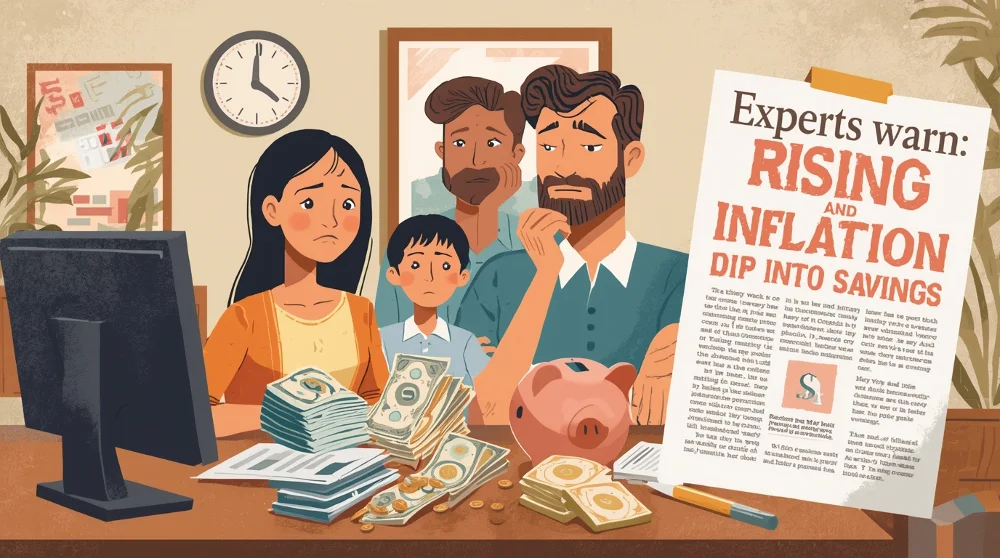
On a chilly January morning in Toronto, Maria Langford opened her banking app expecting the same familiar routine—checking her balance, reviewing a few transactions, and making sure her monthly budget still held together. Instead, she found herself hesitating at the screen. For the third month in a row, she had withdrawn money from her savings account, not for a vacation, not for an emergency, but simply to cover groceries, utilities, and transportation.
“I never thought I’d be dipping into my savings just to buy basics,” she said. “A year ago, I felt financially stable. Now I feel like I’m constantly losing ground.”
Maria’s experience is far from unique. Across Canada—and increasingly across Europe and the United States—families are discovering that their paycheques do not stretch as far as they once did. While inflation rates have eased compared to their pandemic peak, prices for essential goods and services remain significantly higher than three years ago. And for many, wages have not kept pace.
A growing number of households are tapping into their savings
Financial advisers across the country report a surge in clients who are withdrawing funds from their emergency reserves or savings accounts just to make ends meet. Some are using savings to pay off credit-card balances that ballooned during months of rising prices. Others are covering rent increases, higher mortgage payments, or unexpected insurance costs.
“What we’re seeing is a structural shift in how households manage cash flow,” said one senior financial planner at a national wealth advisory firm. “People are not just slowing down their savings. They’re reversing course—pulling money out, often with no strategy for replenishing it later.”
According to aggregated data from several Canadian consumer finance organizations, the proportion of households reporting a “declining savings balance” has risen sharply over the last year. A significant share also says they would struggle to handle an unexpected $1,000 expense without borrowing.
Why is this happening now?
The simplest answer is also the most obvious: the cost of living has risen faster than incomes. But beneath that broad explanation lies a series of interrelated pressures that have reshaped family budgets.
1. Housing costs have surged—and continue to surge
While interest rate hikes have slowed inflation, they have also pushed mortgage payments to historic highs. Households renewing mortgages today often face monthly increases of several hundred dollars. Renters are not faring better; vacancy rates remain low, giving landlords the leverage to raise prices beyond what many families can comfortably afford.
In cities like Vancouver, Toronto, and Ottawa, tenants report yearly increases that push their budgets to the breaking point. Families that once allocated 30% of their income to housing now find themselves dedicating 40% or even 50%.
2. Everyday essentials remain stubbornly expensive
Food prices remain a top concern for most households. Core grocery items—bread, dairy, meat, produce—have all seen substantial increases over the past two to three years. And although inflation has cooled, the cumulative effect of multiple years of price growth means that costs remain significantly higher overall.
A loaf of bread, a carton of eggs, a simple bag of apples—these items are no longer the budget-friendly purchases they once were. Compounding this trend is the ongoing issue of “shrinkflation,” where product sizes shrink even as prices hold steady or rise.
3. Insurance, transportation, and utilities have climbed
Auto insurance premiums are up in nearly every province. Car maintenance and repair costs have risen sharply due to supply chain pressures. Public transit fares have increased in some cities, and electricity rates have also edged upward.
Together, these incremental increases create what advisers call “compound financial pressure”—a slow accumulation of costs that silently erodes a household’s budget.
4. Psychological fatigue is amplifying financial strain
Perhaps surprisingly, many advisers point to an emotional factor: exhaustion. Families have been in “tighten your belt” mode for more than two years. For some, the constant vigilance required to manage a budget in this climate has led to frustration and resignation.
“When people feel they’ve done everything—cut subscriptions, meal plan, budget carefully—yet still fall behind, many decide to give themselves short-term relief by pulling from savings,” one expert explained. “It’s understandable, but it also threatens long-term financial stability.”
The consequences of eroding savings
Using savings is not inherently problematic; after all, that is what emergency funds are for. But when withdrawals become habitual—or when savings are not replenished—the long-term risks grow.
Short-term relief, long-term vulnerability
Savings exist to cushion against unexpected events: job loss, medical emergencies, urgent home repairs. If households drain these reserves, they become more exposed to shocks. A car breaking down or a sudden rent increase can quickly spiral into unmanageable debt.
Retirement plans are also at risk
Many households have paused or reduced contributions to retirement plans. Some have borrowed from registered savings programs. While these decisions may ease current pressures, they also extend the time needed to reach future financial goals.
As one adviser put it: “You don’t feel the impact today—but in ten or twenty years, you absolutely will.”
A growing reliance on credit
Experts warn that dipping into savings often comes paired with increased borrowing, especially through credit cards or personal loans. High interest rates make this trend particularly concerning. What begins as a temporary fix can become a long-term debt cycle.
What experts recommend now
Despite the challenges, financial professionals emphasize that households still have tools to regain control. The strategies may not be dramatic, but they are practical—and effective when applied consistently.
1. Review your budget monthly, not annually
With prices shifting rapidly, a once-a-year budget review is no longer sufficient. Monthly check-ins help families stay responsive and adjust before imbalances grow too large.
2. Separate expenses by priority
Advisers recommend placing expenses into three categories:
Essential (rent, insurance, utilities, groceries)
Semi-essential (transportation options, school activities, some services)
Discretionary (entertainment, dining out, subscriptions)
This approach helps households identify which expenses can be adjusted without compromising stability.
3. Find unnoticed “budget leaks”
Small subscriptions, duplicated services, unused apps, and automatic renewals are common culprits. Cutting just two or three of these can meaningfully reduce monthly costs.
4. Maintain at least a small monthly contribution to savings
Even $50 or $100 per month helps reinforce saving as a habit. The psychological benefit of continuing to save—even minimally—can be significant.
5. Avoid relying on credit cards for daily expenses
High interest rates mean that even modest balances can grow quickly. Experts urge families to limit credit use, especially for routine purchases.
6. Build a one-month “micro emergency fund”
If a traditional three- to six-month savings cushion feels impossible, professionals suggest starting with a one-month reserve. This smaller goal is more achievable and still provides essential protection.
A global pattern, not a local anomaly
Canada is not alone in this struggle. Similar trends are being reported across the United States, the United Kingdom, Germany, and Australia. Rising housing costs, energy prices, and food inflation have put pressure on millions of families worldwide.
Economists argue that the current financial landscape represents a structural shift—not a temporary blip.
Looking ahead: building resilience in a changed world
As households navigate this challenging period, financial experts emphasize the importance of developing sustainable, adaptable money habits. While many factors remain beyond individual control, small proactive decisions can help rebuild a sense of financial stability.
Maria, the Toronto mother who started her morning with an uneasy glance at her savings account, says she is now trying to rebuild—slowly. “It’s overwhelming,” she admitted. “But I know that even small steps matter. I don’t want to feel this vulnerable again.”
Her sentiment reflects a broader truth: financial resilience is not built through sudden leaps, but through steady, intentional choices—especially in uncertain times.